




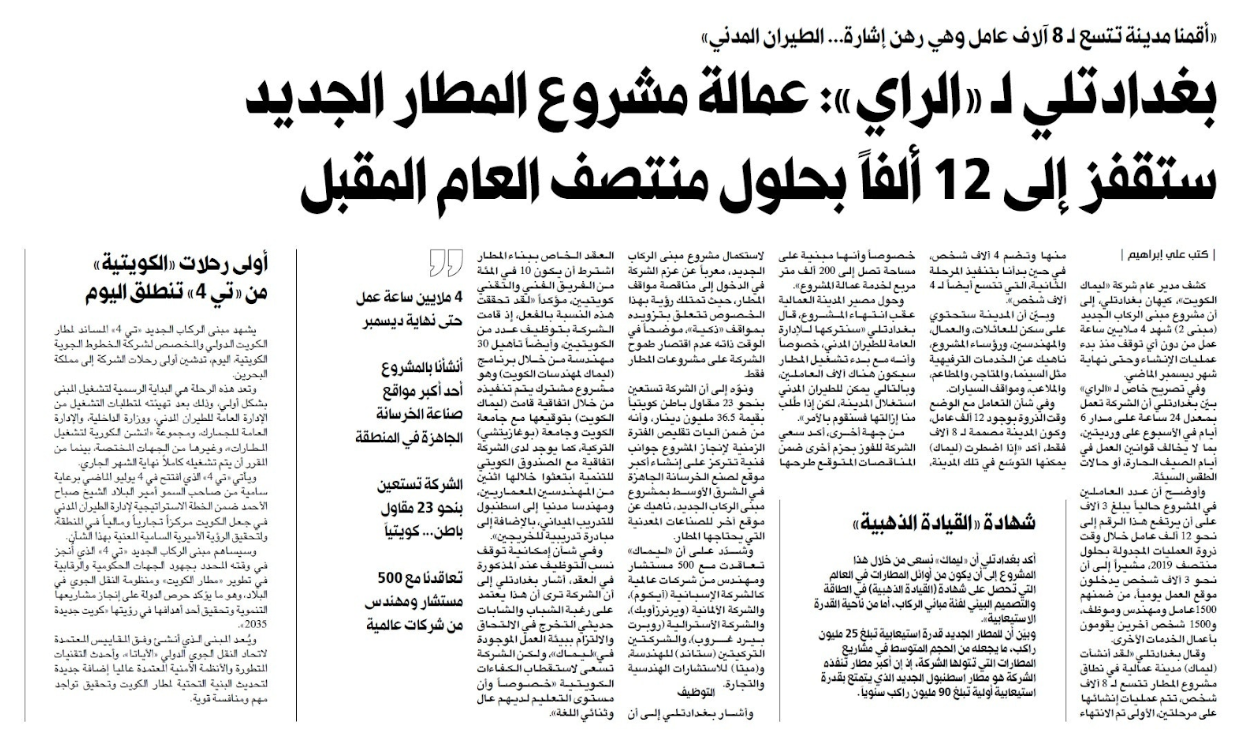
Bagdatli to ‘Al-Rai’: About 4 million hours of non-stop work since the start of construction on the New Passenger Terminal project (Terminal 2)
The company anticipates winning other bids in the construction and infrastructure sectors in Kuwait.
Built one of the largest ready-mix concrete plants in the Middle East, and another plant for steel.
Approximately 4 million hours of non-stop work since the start of the project.
Our manpower constitutes about 3,000 workers, reaching 12,000 workers in peak time of mid-2019.
An integrated labor city with a capacity of 8,000 people within 200,000 sqm, at the disposal of the DGCA.
The labor city includes restaurants and commercial centers and its capacity can increase to 12,000 people.
Interview with Al Rai Newspaper, Kuwait — General Manager at Limak Kuwait, Kayihan Bagdatli revealed that the company conducted about 4 million hours of non-stop work at the New Passenger Terminal 2 project (T2) since the beginning of construction till December 2017, highlighting that the number of workers for the new terminal has reached to around 3,000, which is expected to increase to 12,000 workers at its scheduled peak time in mid-2019. He adds that many essential and supporting operations that are focal to completing the project are currently underway.
During the interview, Bagdatli confirmed that the company is looking forward to bidding on the rest of the packages for the New Passenger Terminal (T2), revealing the company’s intentions to bid on the airport’s parking tender, with a vision of building a smart parking for the new terminal, in addition to bidding on other non-airport related projects.
Additionally, Bagdatli said that Limak developed a fully integrated labor city to support a capacity of 8,000 people affiliated with the project, stating that after the project is completed the city will be at the disposal of the DGCA, who can use it to house the new airport’s staff or request Limak to dismantle it.
In order to help expedite the completion of the project, Limak constructed the largest ready-mix concrete plant in the Middle East, and another plant for manufacturing steel, which plays a large role in expediting the process.
Limak Kuwait was established through the Kuwait Direct Investment Promotion Authority with a paid-up capital of KD 250,000, which later increased to KD 10 million. The company was classified as category (A) by the Central Agency For Public Tenders (CAPT). Limak Kuwait received a license for building roads and bridges and another for general construction work from CAPT.
The company is not only working on the New Passenger Terminal project but also working on other infrastructure projects in partnership with different entities.
We have different projects with other prominent contractors. For example, we have constructed and completed the infrastructure of the West Abdullah Al-Mubarak project and delivered it two months ahead of its scheduled deadline. We are also working on the expansion project of the Infectious Diseases Hospital. We have recently won the bid to construct and develop the infrastructure, roads and parking of South Abdullah Al-Mubarak housing project through our local partner KCC, in addition to allocating the project’s 3260 units to power stations. We are also participating in tenders through which we can draw on our long experience in infrastructure and road work.
We have logged more than 3.8 million working hours on the project since our starting date till December 2017. The company works 24 hours, 6 days a week, 2 shifts a day and follows labor laws regarding extreme weather conditions such as sand storms and high temperatures during the summer.
We have 3,000 people who enter the project site daily, 1,500 of which are workers, engineers and employees, and 1,500 service workers such as drivers. The number of workers will reach 12,000 during the project’s peak time mid-2019 and then decrease gradually towards the near completion of the project.
The current workers are performing excavations and underground foundations, however, when above ground construction work starts, the number of workers will increase accordingly.
Limak has built an integrated labor city for the workers working on the development of the airport terminal. The city hosts 8,000 people; divided into two phases. Phase 1 constitutes 4,000 people and has been completed, and phase 2 which is in the process of being developed; hosting another 4,000 people. The integrated labor city will contain recreational areas for workers, engineers, project managers/directors and their families. It also contains leisure amenities such as movie theatres, shops, restaurants and sports fields.
Many of our contractors already have accommodation, however, if we must, we can expand the labor city already 200,000 sqm to service the people working on the airport expansion project only.
Our contract stipulates that 10% of the technical team be Kuwaitis, which we have achieved. We also trained over 30 female engineers as part of the ‘Kuwait Engineer Girls Program’; which is a joint project by Limak, Kuwait University and Boğaziçi University. The first edition of the program was concluded successfully and an official graduation ceremony will be held in March. The graduates will be given the opportunity to work at Limak, should they accept. We also have an agreement with the Kuwait Fund for Arab Economic Development where two architects and a civil engineer were sent to Istanbul to receive field training. Additionally, we have an internship initiative for graduates.
This depends on the ambitions and the desire of the Kuwaiti graduate to join Limak. We, however, seek to attract Kuwaiti talents, particularly those with a high level of education and are bilingual. This is part of transferring Limak’s expertise to Kuwait.
We aim for this project to be the largest airport terminal project to achieve LEED Gold certification for energy and environmental design. In terms of capacity, the new terminal will launch with a capacity of 25 million passengers.In comparison to the other terminals we’ve worked on, it counts as medium size as we are currently building the new Istanbul airport, the largest airport in the world with an opening capacity of 90 million passengers a year.
Limak Kuwait’s mission does not only include the new airport. We are participating in tenders for construction and infrastructure projects that are being developed in Kuwait, such as the Silk City and others. We also aspire to invest in the information technology sector, software development, medical laboratories, smart parking and renewable energy.
The company uses around 23 local subcontractors with a value of KD 36.5 million.
The project’s deadline according to the contract is 2022, and we aim to complete it by 2021. To do so, we need to work with the Ministry of Public Works, the Directorate General of Civil Aviation and concerned entities. Together, it is possible to deliver the project ahead of its deadline.
In addition to Limak’s engineers and experts, we contracted 500 consultants and engineers from international companies such as the Spanish company ‘Aecom’, German company ‘Wernersobek’, Australian company ‘Robert Bird Group’, and two Turkish companies ‘Stand’ and ‘Metta Engineering Consulting and Trade LTD’. We also built the largest ready-mix concrete plant in the Middle East to support the airport project, as well as, another plant for the manufacturing steel needed in operations. All of this will definitely speed-up the process of completing the project as soon as possible.
Once the project is completed, we will leave the city to the DGCA who can use it to house the employees working at and operating the airport. However, if they request to remove it, then we will.
Kayihan said that the company is interested in bidding on the airport’s parking tender, adding that they have ideas to provide the airport with smart parking.
Limak does not only build airports, it also owns them and is currently operating four airports: New Istanbul airport, the largest airport in the world with an opening capacity of 90 million passengers, Pristina International Airport in Kosovo with a capacity of 5 million passengers and Blaise Diagne International Airport in Senegal with a capacity of 3 million passengers.
Kayihan shed light on Limak Airport Services Institute which is a joint program with the Pristina International Airport in Kosovo in collaboration with Boğaziçi University Life-Long Education Center, Pristina University and French Civil Aviation School ENAC.
The institute trains 30 students per edition and aims to build the students’ professional and academic capabilities and support them in building their future careers by offering professionally accredited training programs in the airport management field. Training takes place at the Pristina International Airport and taught by experts from Boğaziçi University and ENAC Institute.
Students who successfully complete the training program become eligible for an internship and a chance at employment in Turkey or France afterwards.
(ENDS)
 24 December 2025
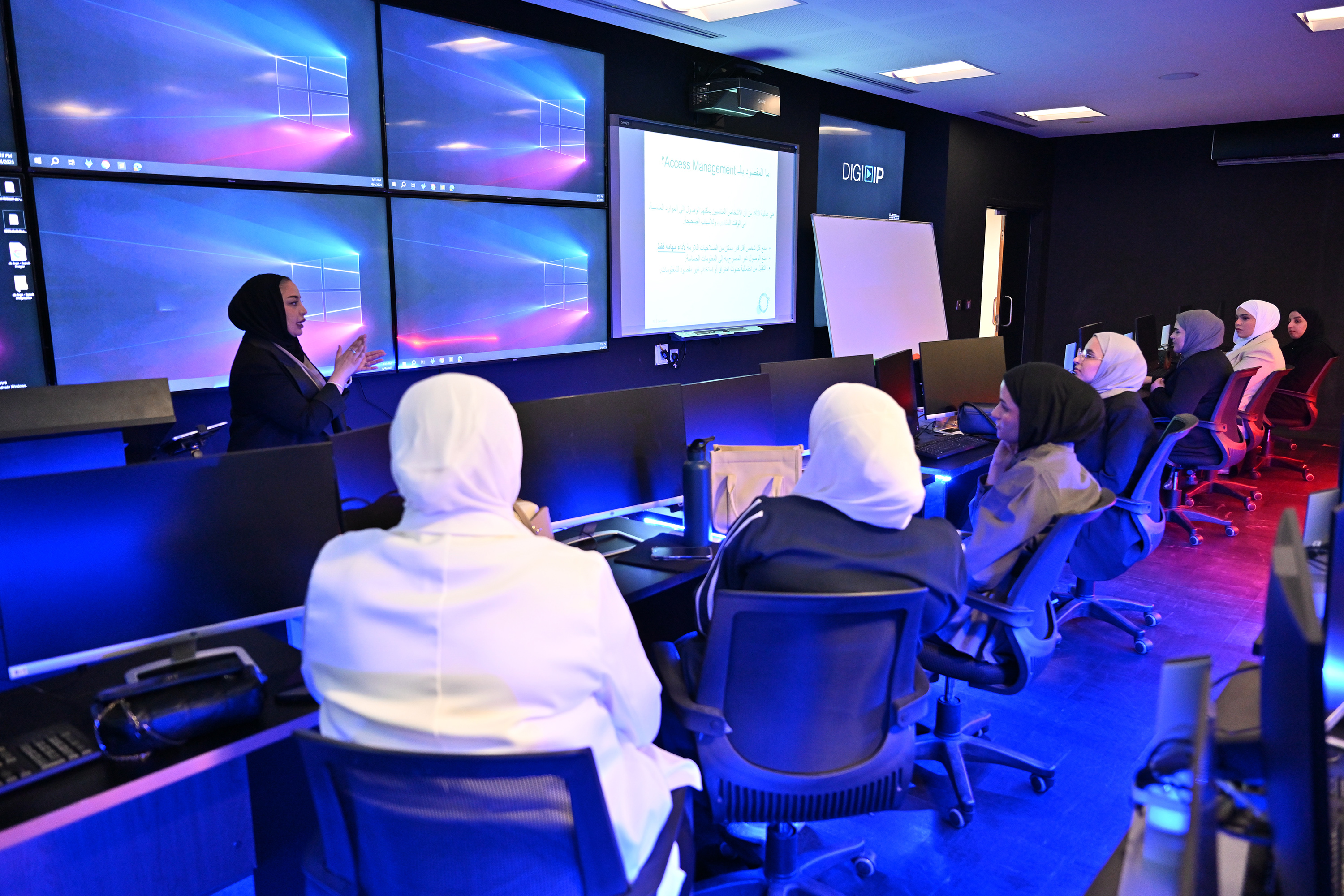
Kuwait City, Kuwait — Zain Kuwait’s ‘Women in Tech’ initiative proved to be a resounding success in 2025, as the company continued to open new pathways for women into digital and technology roles by developing talent, reskilling career pathways, strengthening readiness for the digital job market, and creating real opportunities for employment, professional growth, and […]
 19 March 2023
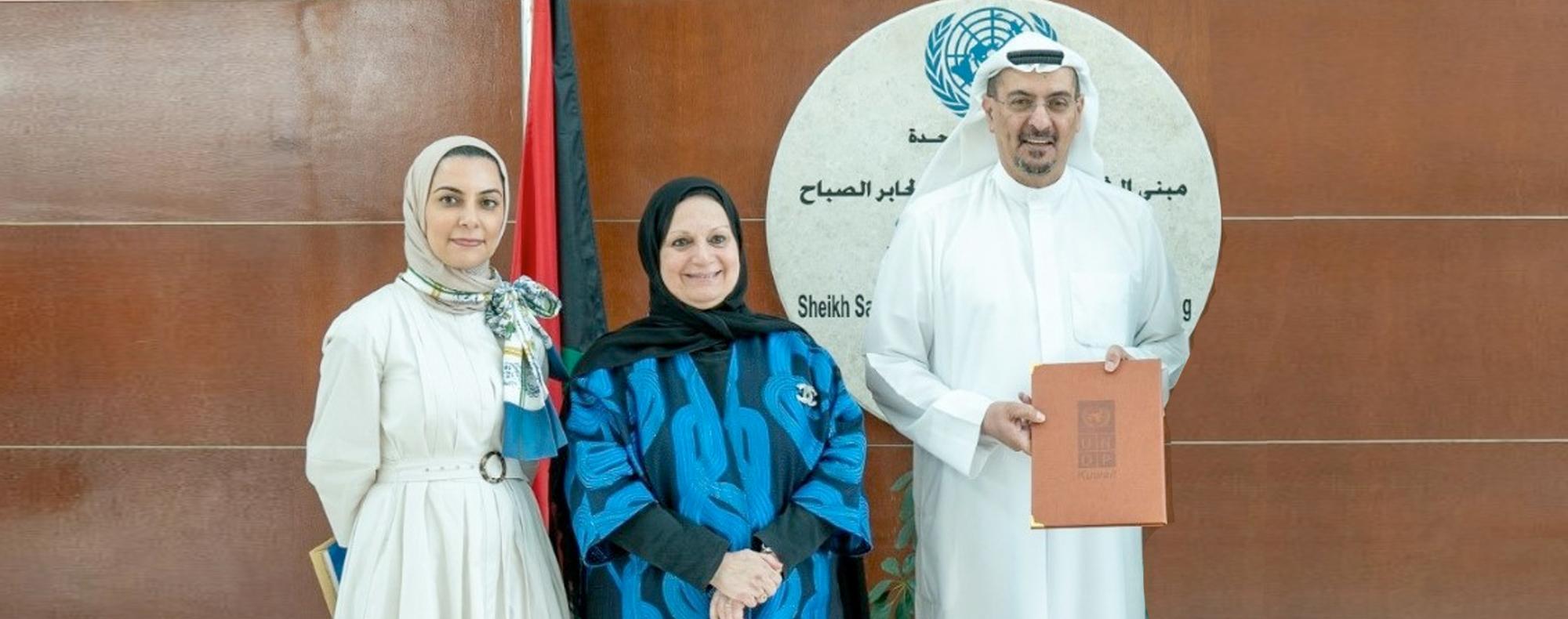
Kuwait City, Kuwait — Kuwait Finance House (KFH) signed the Women’s Empowerment Principles agreement with the United Nations Development Programme (UNDP) at the UN House Building. Group Chief Human Resources Officer at KFH, Zeyad Abdullah Al Omar said by endorsing UN Women’s Empowerment Principles, KFH emphasized that women empowerment is essential to Kuwait economy and […]
 20 February 2024
Kuwait City, Kuwait — AmCham Kuwait, under the patronage of the Supreme Council for Planning and Development, hosted a landmark diversity & inclusion summit on ‘Inclusion Beyond Initiatives Towards Sustainability’. The summit gathered prominent leaders from the business world, policymakers, and thought leaders from across Kuwait, aiming to address the imperative need for sustainable diversity […]