





She called via "ANNAHAR" for supporting the entry of qualified women into the boards of directors of companies.
Kuwait City, Kuwait — Deputy Secretary-General of the Investment Companies Union, Fadwa Darwish, affirmed the capability of Kuwaiti women to prove themselves in the investment sector, stating their strong desire for learning and self-development. She indicated that the Investment Companies Union has succeeded in enhancing the concept of training and developing the skills of its employees, enabling investment companies to overcome the challenges and crises they faced. Darwish stated in an interview with “Al Nahar” that the training center affiliated with the Investment Companies Union primarily aims to provide specialized training courses and programs to enhance the skills of employees in investment companies, aiming to elevate the workforce in the investment sector and financial markets. Darwish pointed out that they collaborate with major international and local companies specialized in these fields, explaining that international expertise is utilized to understand how to address the technical challenges facing investment companies and assist them in solving many technical and administrative issues.
Darwish emphasized that employees in the investment sector have understanding and awareness, and women are very present in training rooms with a passion for development and advancement, adding that Kuwaiti women attending training have a high cultural level and their numbers are increasing.
Legislation and Laws:
Regarding the challenges facing women’s work in the investment sector, Darwish stated that male dominance in senior positions in some companies is among the challenges they face. However, many women are striving to work and advance in investment companies. She emphasized that women need support, especially from business owners, to employ female competencies in the investment sector and financial markets. She pointed out that evidence of women’s desire to work in the investment and financial sector is their tendency during the education stage to work in investment and finance fields, driven by their passion for working in this field and their pursuit of obtaining high specialized certifications in the financial field such as CFA and risk management.
Regarding the challenges facing women’s work in the investment sector, Darwish pointed out that existing legislation and laws are among those challenges, stressing the need for women’s centers and leadership to work alongside business owners to mobilize human resources efforts and enhance mechanisms that deal with women’s employment, retention, and promotion by establishing indicators and a roadmap for comprehensive business and leadership.
Independent Member Law:
She said that the presence of women in senior positions in companies is low, noting that there are attempts to empower women to work in sectors such as banking and investment companies, like the law concerning independent members which can be filled by competent women capable of achieving accomplishments, wondering what prevents women from being on company boards as long as they possess the competence and talent?
Darwish stated that the World Bank has indicated that Kuwait ranks low regionally and Gulf-wide in enabling women in the workforce, especially in leadership positions. She suggested the necessity of working on setting indicators by the World Bank regarding women’s work in terms of their employment and retention in their field of work.
Performance Evaluation:
Regarding the evolution in changing the mindset of investment companies towards training as a key pillar for company development and enhancing the workforce, it was mentioned that training in both the government and private sectors was, at one point, considered somewhat of a luxury, especially boosted by financial abundance before the financial crisis in 2008. This abundance made many companies view training as a luxury or a perk given to their employees.
It was further noted that after the crisis, companies reconsidered training as a key element in evaluating employee performance and achieving real added value for the company, increasing its revenues and operational profits.
Noticeable Increase:
It was pointed out that the training center affiliated with the union began conducting a comprehensive survey of global companies operating in the field of training, selecting high-quality companies as well as high-quality courses themselves.
The importance of these courses was evidenced by significant increases over the five-year period from 2017 to 2021, with the number of participants in union training courses increasing from 173 to 982 trainees. Additionally, the number of events in 2021 reached about 57 courses compared to 15 courses in 2017. General workshops were also conducted to raise awareness about emerging topics such as cybersecurity, market maker, environmental management, social responsibility, and governance, which companies rely on to attract foreign investors and invest in those companies.
Investment Awareness:
It was clarified that workshops and courses held by the union invite both investment and non-investment sector companies to participate, with the primary goal being to achieve investment awareness rather than profit maximization. The primary aim of the union was and still is to raise awareness among workers in the investment sector and promote the interests of investment companies.
It was believed that the investment sector has proven itself capable of managing and overcoming crises, explaining that the investment sector has become essential in driving and developing the market. Many companies have addressed the repercussions of the crisis and significantly mitigated its impact.
Regarding the investment sector’s benefit from the crises it faced, it was pointed out that crises have opened up opportunities for all economic sectors in the country, including the investment sector, where promising opportunities have emerged in sectors such as artificial intelligence, technology, health, and others. It was emphasized that what seemed unlikely before the COVID-19 pandemic in terms of information technology has now become a tangible reality, such as the use of robots in factories and companies, as well as remote work.
Accumulated Experience:
Darwish spoke about her experience in the financial markets and investment sector, mentioning her certification in Financial Institutions Management from USLA University in the United States and her Master’s degree in Economics, with a research title published in a book from Chrom Helm publishing house about Gulf financial markets with a focus on the Kuwaiti stock market crisis.
After completing her studies, she worked at the Central Bank of Lebanon and was among the team members involved in establishing financial markets in Lebanon. She later moved to Kuwait in 1995 and worked as a consultant for the United Nations Development Program on major projects in Kuwait, including the development project of islands such as Boubyan and Failaka. She then transitioned to another project focusing on enhancing the performance of employees in the government sector in collaboration with the Restructuring Agency, working on improving employee performance. After the establishment of the Investment Companies Union, she joined to work there. During a year, the financial crisis of 2008 occurred, which reinforced her work at the union, attracting entities to hold seminars, activating the research center, and attempting to improve the performance of employees in investment companies
(ENDS)
 23 February 2025
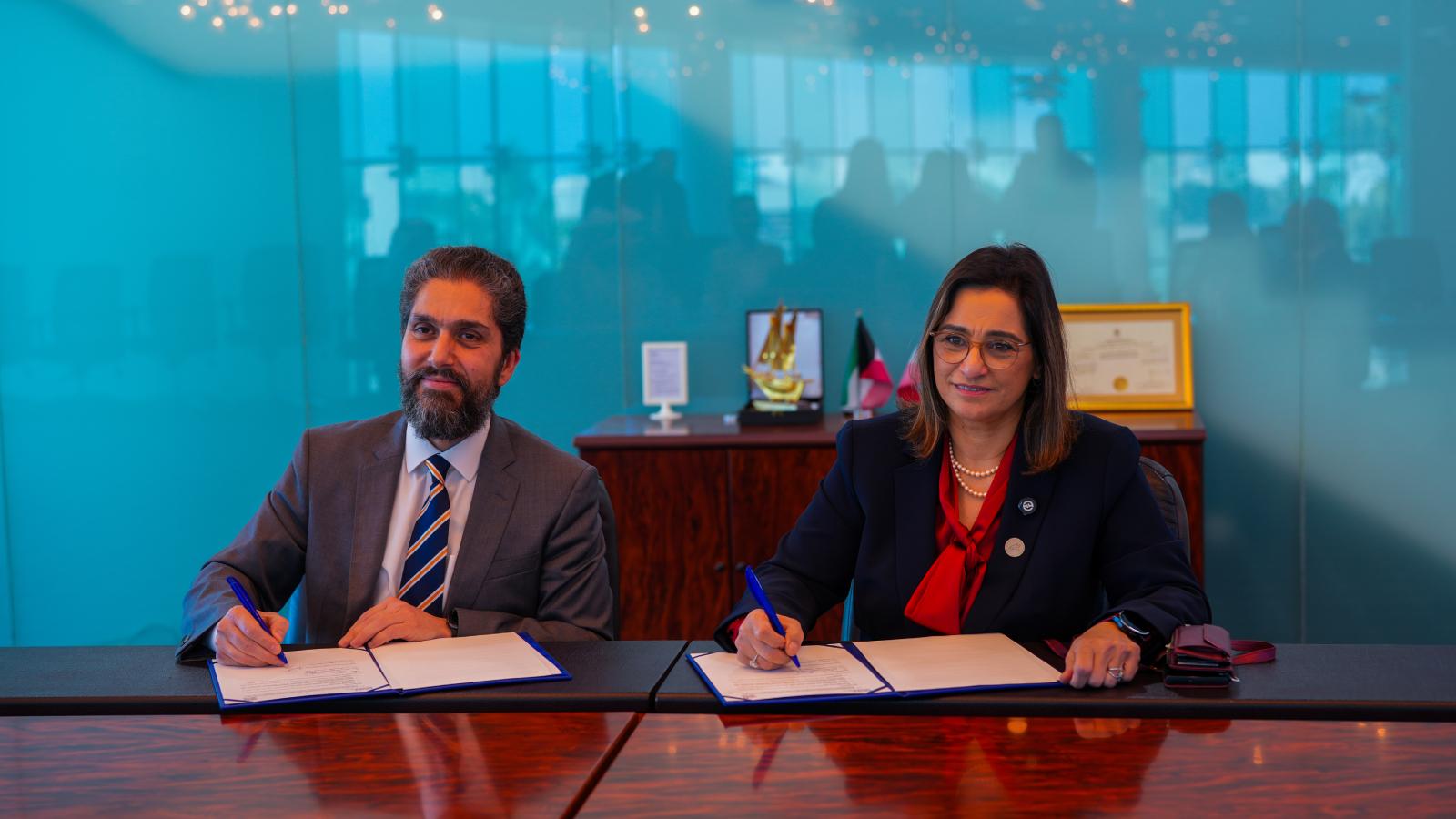
Kuwait City, Kuwait — As part of its ongoing commitment to empowering and equipping young professionals – and reinforcing its position as a preferred employer in Kuwait’s financial sector – Gulf Bank has signed a strategic partnership agreement with the Gulf University for Science and Technology (GUST) to enhance training and employment opportunities for students. […]
 12 March 2022
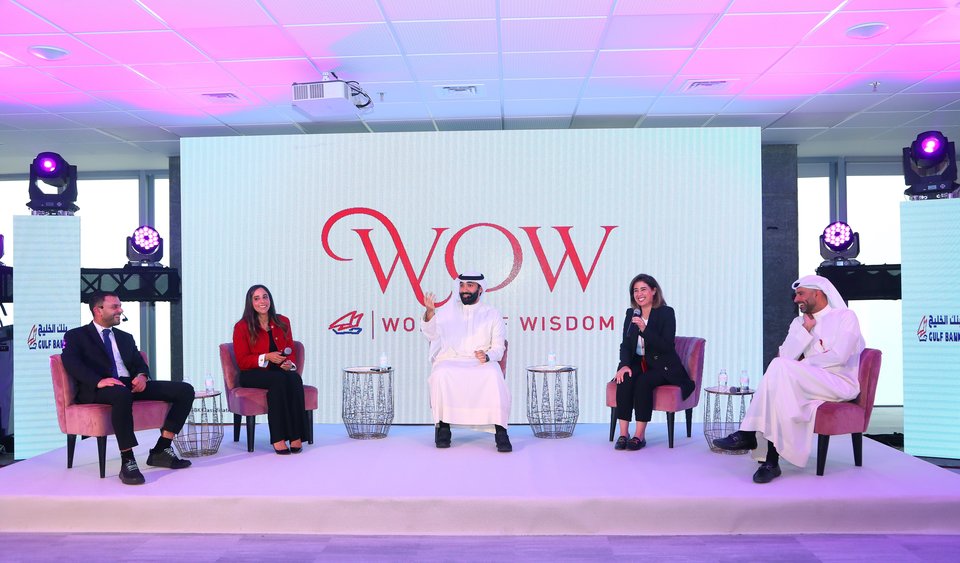
Kuwait City, Kuwait – On the occasion of International Women’s Day, Gulf Bank’s Human Resources department organized a workshop for all bank employees to attend titled “Levelling the Playing Field”, which has a number of leaders from the bank participating by sharing their wisdom and success stories in relation to empowering women. The workshop included a […]
 21 September 2021
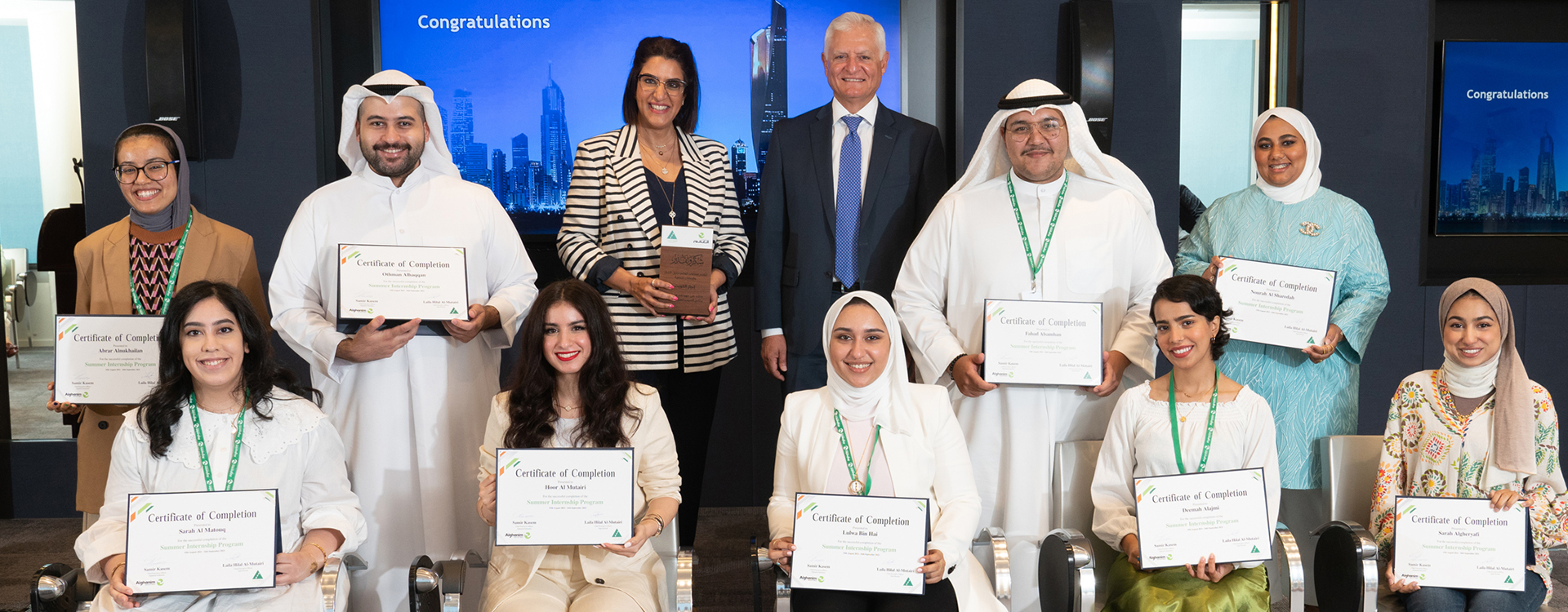
Kuwait City, Kuwait — Alghanim Industries, one of the largest privately-owned companies in the region, concluded its annual summer internship program, organized this year in partnership with INJAZ-Kuwait. The closing ceremony took place at the Chairman’s Club in KIPCO Tower, and was attended by CEO of Alghanim Industries Samir Kasem, CEO of INJAZ-Kuwait Laila Hilal […]